Physician Burnout: Signs High-Functioning Doctors Often Miss
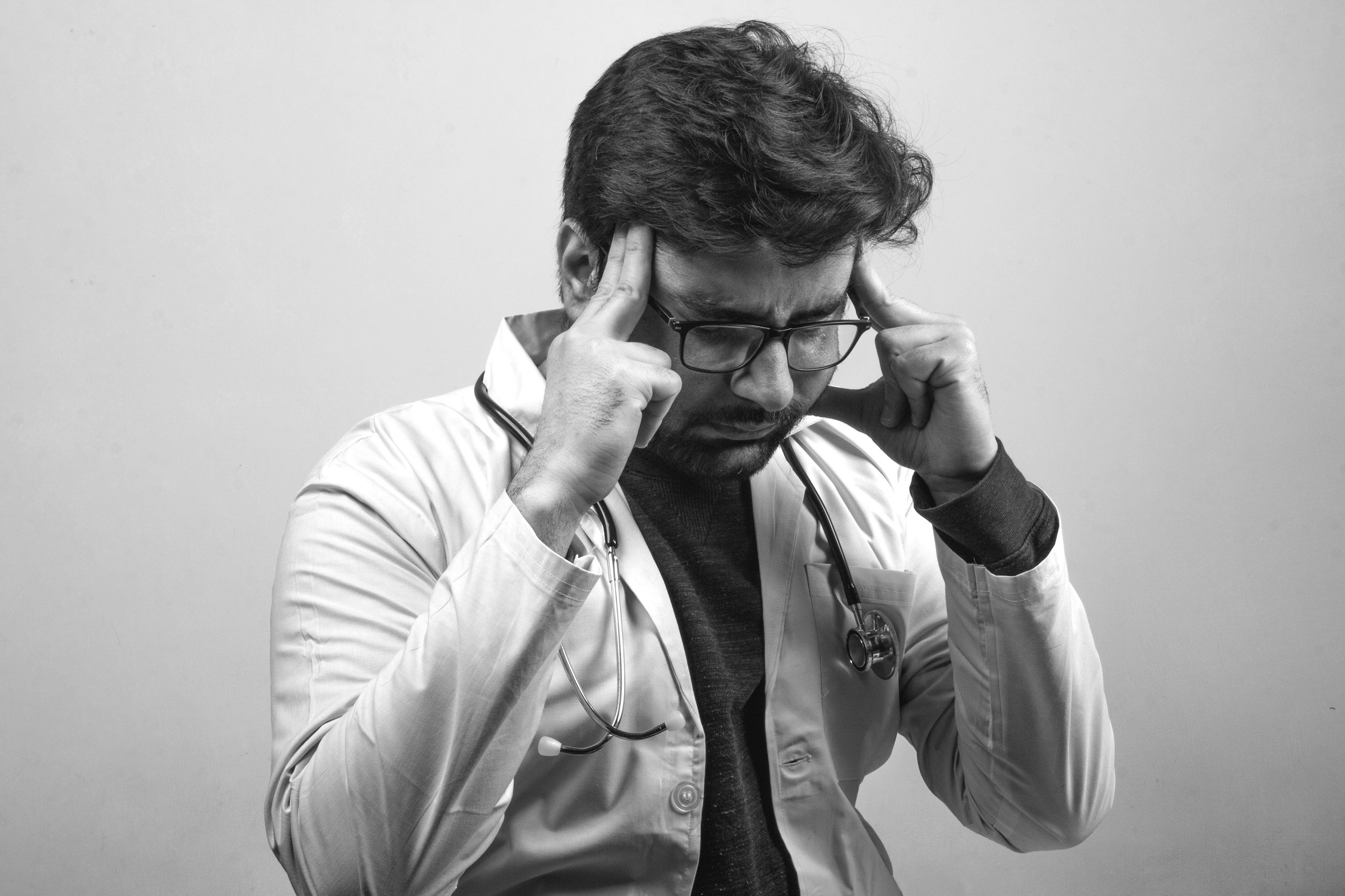
You can continue seeing patients, answering messages, and making sound clinical decisions while becoming progressively less able to recover from the work.
Colleagues may still see you as capable. Patients may continue receiving careful care. Your performance may give no obvious indication that something has changed.
Privately, the work feels heavier than it used to.
Your patience is shorter. Your emotional range feels narrower. Time away from medicine no longer restores you in the same way.
Physician burnout does not always begin with a dramatic collapse. It often develops while a doctor is still functioning well enough that no one recognizes the internal cost.
That includes the physician experiencing it.
Physician Burnout Can Hide Behind Competence
Burnout and poor performance are not the same thing.
A physician may continue producing strong clinical work while using increasing amounts of energy to maintain the same standard. Tasks that once felt routine begin requiring more effort.
You compensate by working later. You may prepare more extensively or check your decisions repeatedly.
Other people see the completed note, the handled emergency, or the full clinic schedule. They do not see how depleted you feel afterward.
Because the work keeps getting done, the situation appears manageable.
Your ability to endure then becomes evidence that you should continue enduring.
A better question is not whether you can still function. It is what functioning now costs you.
Signs of Physician Burnout High-Functioning Doctors Often Miss
The early signs of physician burnout can be easy to dismiss because they do not necessarily interfere with clinical performance.
You may attribute them to a demanding month, poor sleep, or an unusually difficult patient population. Each explanation may be partly true.
The pattern matters more than any single symptom.
Common signs include:
Dreading your inbox before opening it
Feeling emotionally flat during patient care
Becoming irritated by routine requests
Struggling to recover between workdays
Needing more effort to maintain the same standard
Feeling increasingly cynical about medicine
Having little energy left for life at home
You may also find yourself fantasizing about leaving medicine without having a clear idea of what you would rather do.
That does not always mean you truly want another career. Sometimes the fantasy represents a desire to escape the current level of pressure.
Why Physicians Keep Pushing Through Burnout
Medical training rewards endurance.
You learn to function while tired. You learn to place immediate responsibilities ahead of your own discomfort.
During residency, pushing through may be necessary to get through a demanding rotation. In practice, the same response can become permanent.
Patients still need care. Colleagues are already overloaded. Stepping back may seem as though it will simply transfer your work to someone else.
You may also compare yourself with physicians who appear to be struggling more visibly.
As long as you are still working, you conclude that your burnout cannot be serious.
The internal standard becomes simple:
I cannot be burned out because I am still getting everything done.
That standard identifies burnout only after functioning has deteriorated. It overlooks the months or years during which a physician remains productive while becoming steadily more depleted.
Administrative Burden Creates Work Without an Endpoint
Many physicians still find meaning in direct patient care.
The work surrounding patient care can feel very different.
A visit ends, but the documentation remains. Portal messages arrive between appointments. Prior authorizations and staffing problems become additional responsibilities that must be absorbed somewhere.
The workday may have a scheduled end. The work itself does not.
This creates a persistent sense of unfinished responsibility.
You may leave the office with several notes open. You may also carry a mental list of messages or follow-up tasks.
Even quieter periods become opportunities to catch up rather than recover.
Each individual demand may be manageable. The accumulation is what changes the experience of medicine.
Over time, the meaningful parts of the profession can begin feeling compressed between administrative tasks that never fully stop.
Emotional Detachment and Cynicism Can Be Protective
Physicians are repeatedly exposed to pain, uncertainty, and loss.
Some emotional distance is necessary. You need enough composure to think clearly and continue caring for the next patient.
Under sustained stress, that distance may expand.
You may notice that patient concerns begin sounding repetitive. Compassion requires more conscious effort. Difficult cases no longer affect you in the same way.
Irritation may become easier to access than concern.
You resent the long message before reading it. You expect another request to create more work.
Some of that frustration may be justified. Healthcare systems frequently place unreasonable demands on physicians.
The concern is when cynicism becomes the main way you relate to the work.
Emotional detachment may not mean that you stopped caring. It can be the mind’s attempt to conserve resources that have been repeatedly depleted.
Physician Perfectionism Makes It Harder to Recover
Medicine requires accuracy, preparation, and attention to risk.
Perfectionism begins when those standards expand beyond what the situation reasonably requires.
You may review a note repeatedly because one unclear sentence feels dangerous. You might replay a clinical decision despite having followed an appropriate process.
A minor mistake can remain active in your mind for days.
Physician perfectionism may involve:
Excessive checking
Difficulty trusting your clinical judgment
Fear of appearing careless
Harsh reactions to ordinary mistakes
Feeling responsible for every possible outcome
The issue is not simply having high standards.
It is being unable to recognize when careful work has become sufficient.
Without that endpoint, responsibility follows you home. Your body may leave the hospital or clinic while your mind continues reviewing what could have been missed.
Physician Burnout Often Follows You Home
Your family usually receives whatever energy remains after work.
You may arrive home while thinking about a patient. You could be anticipating tomorrow’s schedule or mentally organizing unfinished documentation.
Ordinary family needs then feel harder to tolerate.
A child asking a question may feel like another demand. A spouse wanting to talk may arrive at the exact moment you are trying to mentally shut down.
From your perspective, you need a few minutes without anyone needing anything from you.
From your family’s perspective, medicine continues receiving your attention after you have come home.
Burnout may also shape how you respond to personal problems. You may move quickly toward diagnosis and solutions.
That approach can be effective in medicine. In a relationship, it may leave the other person feeling managed rather than understood.
You may care deeply about your family while having very little emotional capacity left to show it.
Why Vacations Do Not Always Fix Physician Burnout
Time off can provide temporary relief.
It does not automatically change the conditions that created the burnout.
You may spend the first several days recovering from the weeks before the vacation. By the time you begin feeling more like yourself, you are already thinking about returning.
The benefit disappears quickly when you return to the same schedule and unfinished work.
Some physicians also remain psychologically connected to the role while away.
You check messages. You may wonder what is accumulating or what colleagues are handling in your absence.
The body is on vacation. The sense of responsibility remains active.
Burnout may also be reinforced by personal habits. You might treat every request as urgent or avoid delegating because correcting another person’s work feels inefficient.
A vacation cannot permanently resolve an overloaded system. It also cannot change the patterns that cause you to carry more than your role reasonably requires.
When Physician Burnout Needs Attention
You do not need to wait until you are unable to practice medicine.
Burnout deserves attention when the pattern is no longer resolving after ordinary periods of rest.
Consider it more seriously when:
Time off no longer restores you
Irritability has become part of your normal mood
You feel detached from patients or family
Sleep is consistently disrupted
You dread responsibilities that once felt manageable
You repeatedly imagine escaping medicine
You may also notice that your usual coping strategies no longer work.
Exercise provides less relief. A quiet weekend does not meaningfully reset you.
These signs do not automatically mean that you need to leave medicine.
They do suggest that continuing in exactly the same way is unlikely to solve the problem.
What Physicians Can Realistically Change
Physician burnout is partly a systems problem.
No amount of mindfulness or self-care can fully compensate for excessive workload, poor staffing, or constant administrative intrusion.
Individual changes still matter, particularly when personal standards or habits are adding pressure that the system did not require.
Identify the Main Source of Depletion
“Medicine” may be too broad an answer.
The largest source of burnout could be your schedule. It might be portal messages or a leadership role.
Be specific about what consumes the most energy.
Different causes require different responses. A documentation problem will not be solved through the same changes as moral distress or an unsustainable call schedule.
Separate Clinical Responsibility From Total Responsibility
You are responsible for practicing carefully and responding appropriately.
You are not responsible for controlling every outcome. You also cannot personally compensate for every weakness in the healthcare system.
Notice where your sense of responsibility has expanded beyond what one person can realistically carry.
This does not require becoming indifferent. It requires identifying where your actual role ends.
Determine What Must Change Structurally
Some physicians focus entirely on coping because structural changes feel difficult.
Burnout may require reducing call or changing a schedule. It may involve leaving an administrative role.
Not every option will be immediately available.
The important step is recognizing when the solution must involve more than becoming better at tolerating an unsustainable arrangement.
Reconsider What Excellent Care Requires
Burned-out physicians often continue using standards built for periods when they had more capacity.
You may give every task the same level of attention. You might treat every message as though it carries significant clinical risk.
Excellent care does not require unlimited personal expenditure.
A sustainable standard protects clinical quality while recognizing that your attention and energy are finite.
Therapy for Physician Burnout
Therapy can provide a private place to examine burnout without minimizing the demands of medicine.
Physician burnout should not be reduced to poor self-care or insufficient resilience. Healthcare systems create real workload and administrative pressure.
Physicians may also develop patterns that make it harder to recognize limits or step back before becoming depleted.
For some doctors, perfectionism is central. For others, the main issue is excessive responsibility or difficulty separating identity from medicine.
I provide therapy for physicians in Nashville and online. My approach is direct, practical, and tailored to the individual.
We can identify what is driving the burnout, determine what can realistically change, and develop a more sustainable relationship with medical work.
Learn more about my approach to therapy for physicians in Nashville and online.
Frequently Asked Questions About Physician Burnout
What are the signs of physician burnout?
Common signs include emotional exhaustion, irritability, and difficulty recovering between workdays. Physicians may also experience detachment, cynicism, or reduced satisfaction with medicine.
Can a physician be burned out and still function well?
Yes. Many physicians continue meeting their professional responsibilities while experiencing significant burnout. Strong performance does not show how much energy it takes to maintain that performance.
Why is physician burnout so common?
Physician burnout is often connected to workload, administrative burden, and lack of control. Sustained responsibility and perfectionism may also contribute.
Does physician burnout mean I should leave medicine?
Not necessarily. Some physicians need structural changes within their current role. Others may eventually decide that a different position or career direction is appropriate.
Can therapy help with physician burnout?
Therapy can help physicians understand how burnout is affecting their work and personal life. It can also help clarify which internal patterns and external conditions need to change.